2.8%—that’s the mortgage rate I just gave up. As a millennial, it was letting go of some lost artifact from the Before Times, traded in for a 6% mortgage rate right outside Boston.
After a several-month-long feat of Napoleonic logistics, I still live in a mausoleum of boxes. At least it’s bought me some perspective.
I’ve spent the last six years out on Cape Cod, away from the world, because in spring of 2020, a time of coming plague, I had the instinct to get out of the city and seek water. A rushed house purchase then (unknowingly, luckily) ended up being the best financial decision of my life.
I can look back on my previous years on the Cape with the recognition that I’ve been in a kind of self-imposed exile. I see in the windswept sea days the initial seeds of a couple very good scientific ideas I’m now pursuing and a lot of daily writing. But with the inevitable benefit of hindsight, what I did most over the last several years was just be a dad.

So I spent a lot of time driving around to random beaches and changing diapers and wiping little sandy hands down. We went on many walks in the woods. I read aloud many books in bed at night.
The interregnum is over, and I’ve rejoined the world, and the Great Hoel Household Move of 2026—which occurred through sickness and pregnancy and endless difficulties—is finally done. Finishing it has unlocked something inside me. It’s like when you find a little dam in a stream in the woods, and after nudging over a rock or a branch with your shoe the whole thing goes from a trickle to actually flowing, as naturally as it was always supposed to. All to say, I’ve been writing more again.

THE TIME I SOLD ALL MY STOCKS AND PUT MY MONEY INTO A HOUSE BECAUSE ONE IS NUMBERS ON A SCREEN AND THE OTHER I LIVE IN EVERY DAY
The philosopher Alain de Botton said, in a recent interview:
Home-making is essentially the process of translating what is in you into the language of objects, placings, colors, etc. We’re really looking for an analogy between somebody and their home. The home is a sort of work of autobiography.
Yet we have so little opportunity to express ourselves home-wise. You have to go on the market and hope you can get something that fits you, that feels like you, or that you could make feel like you.
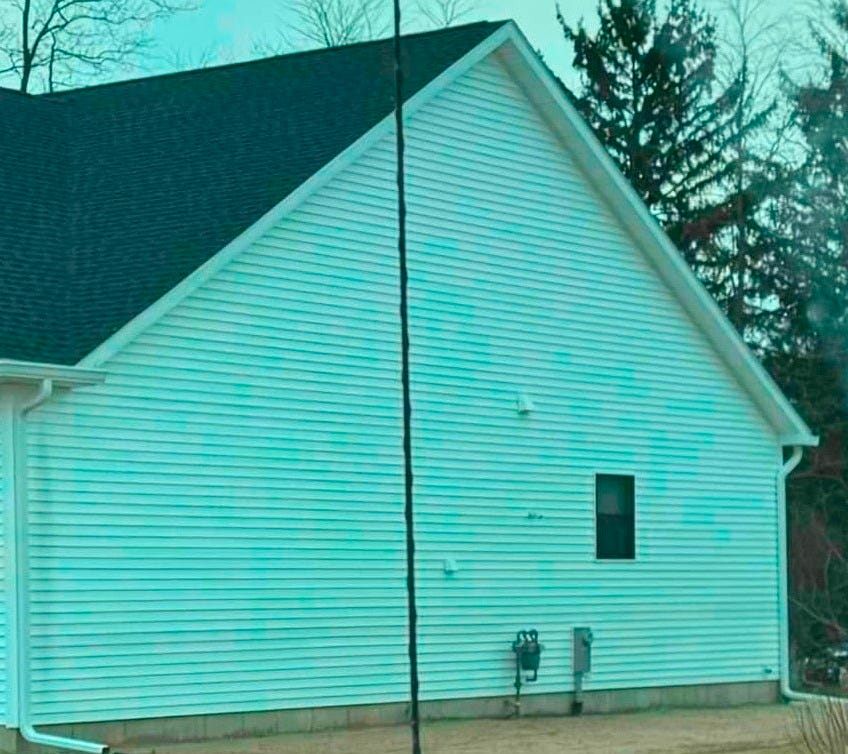
The mass-production of homes is a necessity, and a controversy—YIMBYs and NIMBYs fight in phalanxes across the great housing debate—but one factor lurking above it all is that the blank-faced developer home of today is a thing with no style. It is made to fit ordinances and to navigate through red tape. I get some people like it. It’s clean. All the light switches will work. All the appliances are also… clean. It probably won’t catch on fire overnight. It also sort of sucks at my soul as I drive past like one of those dementors in Harry Potter.
Why can’t we build more beautiful homes? It’s not just money—expensive homes that cost into the millions still often have ugly garage-centric designs where the kitchen window literally faces a wall.


Every so often the braintrust on social media complains loudly that the 20th-century architectural movements ruined current aesthetics, and have made the world less beautiful than it was. We must RETURN to the old ways.
The usual suspects to blame are minimalism and modernism: we all had art deco skyscrapers and classic colonials until those dastardly aesthetic movements pulled a fast one on us! Yet the second you look at actual specifics in something that matters, like homes, the easy narrative falls apart. Here is perhaps the most iconic minimalist house: the Farnsworth House, finished in 1951.
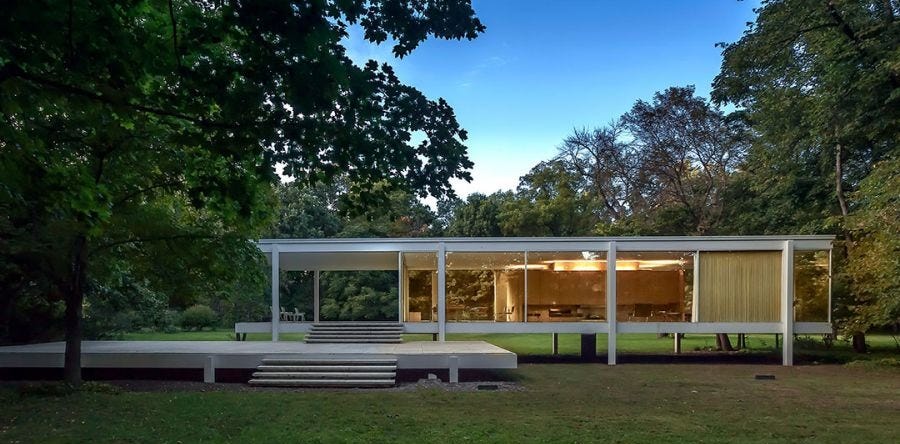
Does that look like the personality-less “millennial gray” or “millennial blue” developer home with tiny windows going in down the street? Is this really the style that “took over” our culture and ruined homes and buildings? Is everything like this now?
Here is a look inside the cozy personal home of Walter Gropius (founder of the much maligned Bauhaus) which sits in Lincoln, Massachusetts, built when he taught at Harvard. Are they making these everywhere now? Are we surrounded by the horror of enormous floor-to-ceiling glass windows, letting the outside into the living room?
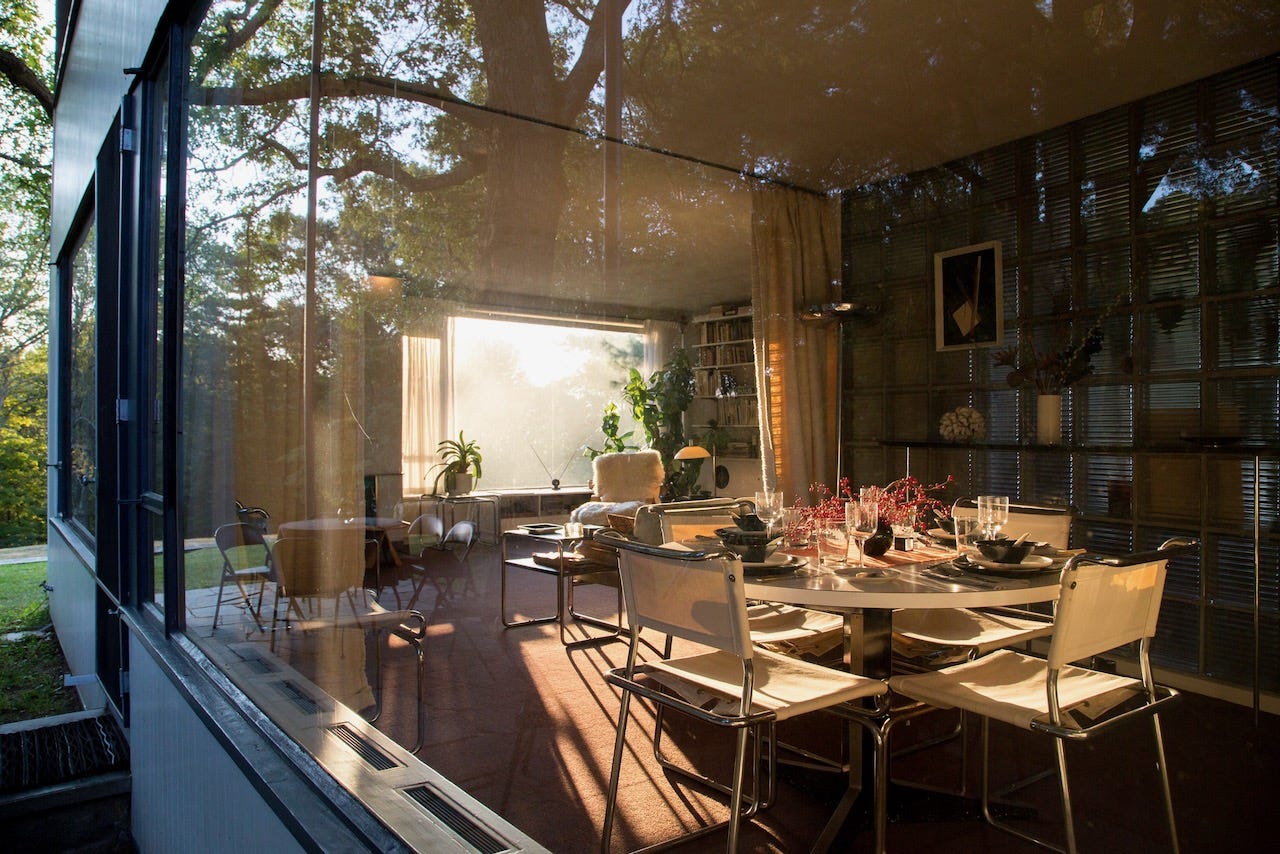
Or, in the real world, do developer homes now have windows that look like this?