


Who writes a sci-fi series where the main character is poet John Keats, dead in 1821 from consumption at the age of 25? Dan Simmons, that’s who—an author who himself died last month, at what feels like (for our present age) a young 77, from complications following a stroke.
I was sad to hear it was something that affected his brain. Simmons wrote the greatest sci-fi book series of the last several decades: the Hyperion Cantos. My cousin (now an accomplished fantasy author himself) recommended it to me when I was a pre-teen. I fell in love with its philosophical world-building, high drama, and its many (many) references to poetry and spirituality and architecture.
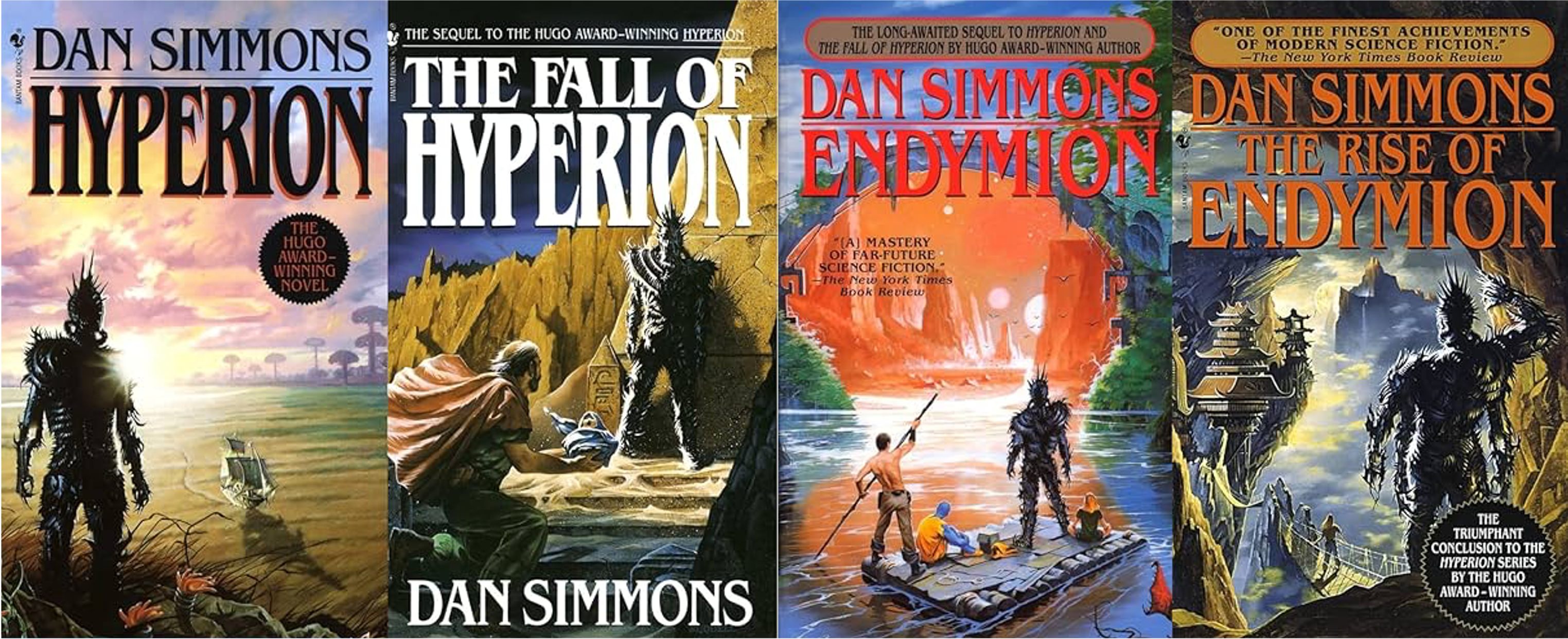
For such a wildly out-there series, the Hyperion Cantos has held up better than other 90s sci-fi. Suddenly, the idea that Artificial Superintelligence would resurrect John Keats or Frank Lloyd Wright because these human geniuses had some sort of incalculable insight the AIs could never achieve on their own is… well, it’s nigh on prophetic.
What did you see, John Keats?
When you choked to death on your own blood, staring up at that ceiling in Rome——the one painted with little white daisies——what did you see?
But what fewer people know is that Simmons was also possibly the best horror novelist of his generation. Pound for pound, or book for book, he was better than Stephen King (and I think King might have occasionally suspected this).
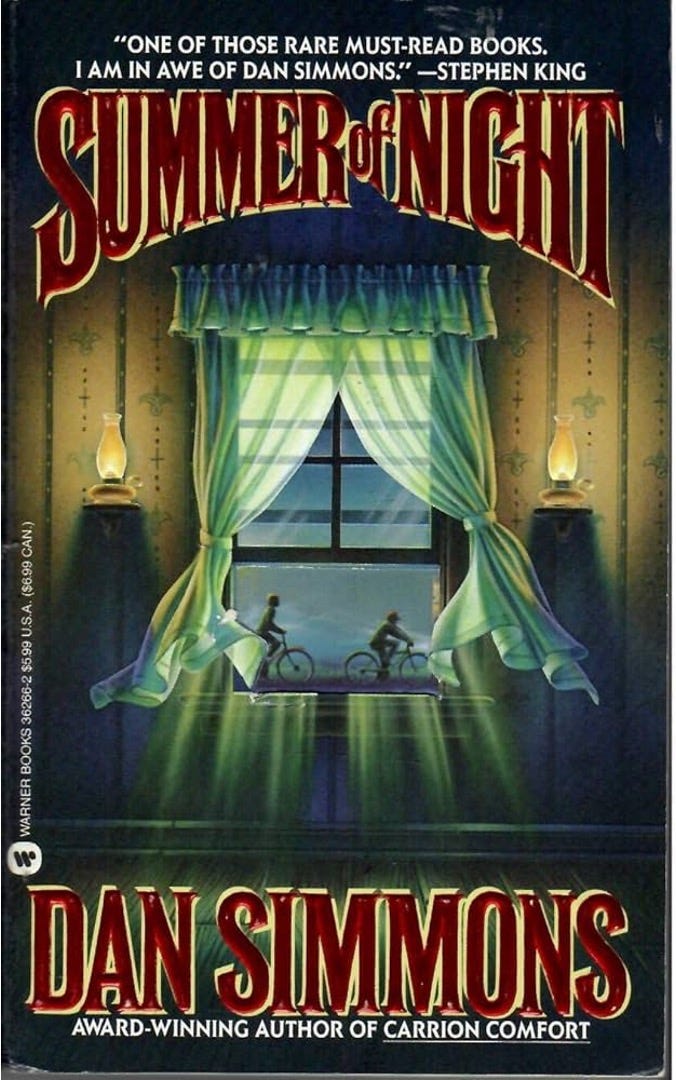
Dan Simmons’ Summer of Night is exactly as if Stephen King put all his frenetic mania into one book instead of five. And it’s also basically Stranger Things (just look at the bikes) in that it mixed the free-range childhoods of the 1960s with supernatural threat in a small town—except it doesn’t suffer from the same clunky downturn after the first 20%.
By the way, I don’t think Stephen King would necessarily disagree with my judgement. After learning of Simmons’ death, King apparently had a dream of his old friend.
“I was walking on my road, and he came along in an ATV,” he said. “I held up a note for him to read, but he just went by me—and into the fog.”
Some might recognize Dan Simmons from one of his other horror novels, The Terror, which got made into a well-acted and well-produced AMC mini-series. A series that did manage to capture the bleak spirit of the doomed Franklin expedition, although was never quite as unnerving as the book.
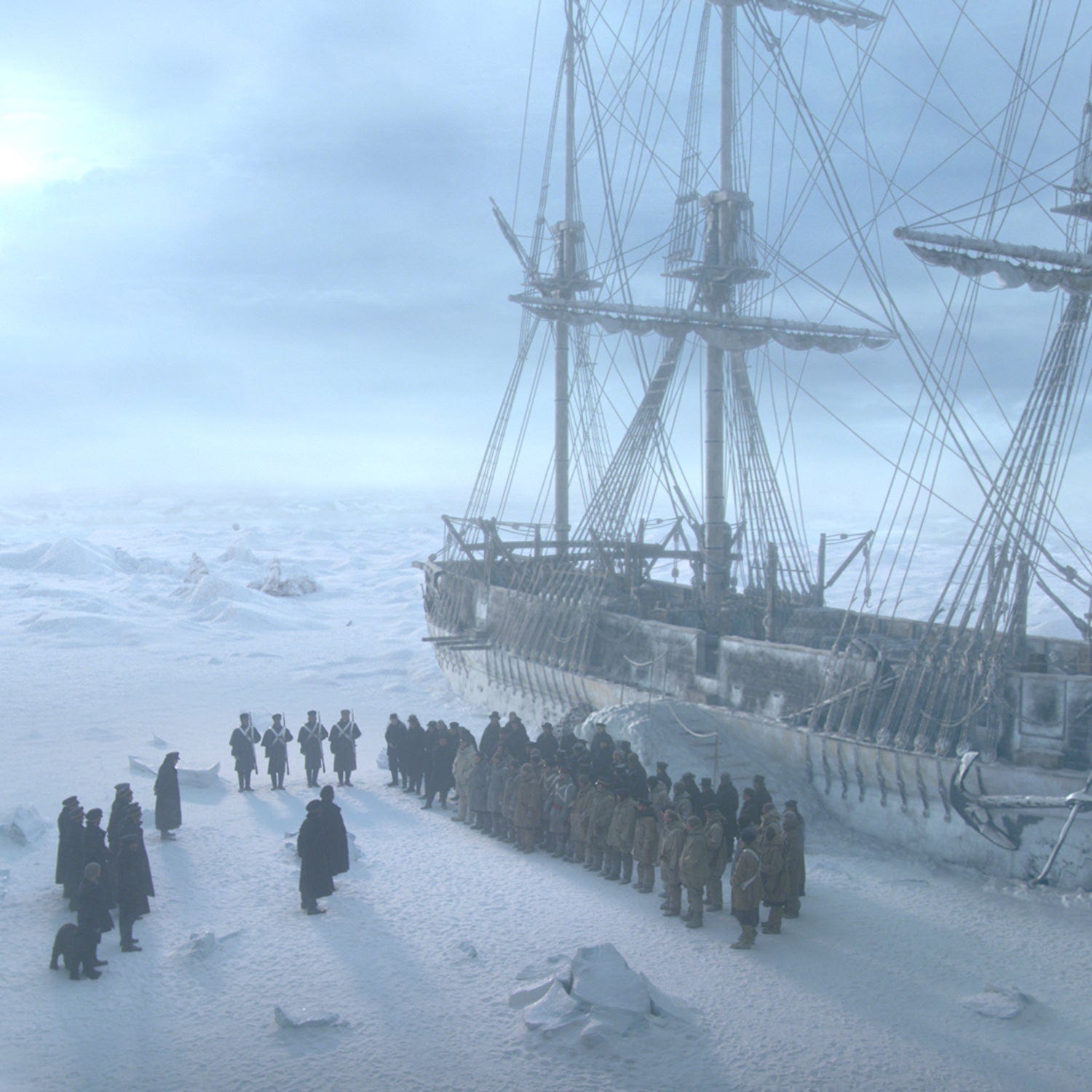
In a way, Simmons was one of the best historical writers of his generation too, and explaining historical anomalies like the lost Franklin expedition as “a monster did it” was very much a kind of unique Simmons genre that he invented, or at least, perfected. He used the same structure with Drood, a horror novel (or is it?) told from the perspective of a zonked-out Wilkie Collins, who plays Salieri to the more talented Charles Dickens. A lot of the book is about the monster of creative jealousy, and a lot of it is about opium hallucinations (or are they?).
Oh, and Simmons also wrote tightly-plotted and hard-boiled noir and thrillers too, and—Wait, why wasn’t Dan Simmons more famous?
In terms of outright name recognition, Simmons doesn’t hold a candle to someone like Stephen King or George R. R. Martin, or even Orson Scott Card. A comparable figure who works across genres would be Margaret Atwood, but unlike Simmons she had at least one huge breakout hit, The Handmaid's Tale, which became a household name.
Simmons’ later habit of firing off hot hawkish and conservative takes online probably didn’t help. I think he even deleted his blog at one point due to the controversy. It’s clear he was a different writer after 9/11. But the political aspects of Simmons’ personality came out far better, and in much finer, subtler form, in his earlier fiction compared to his later online polemics. In the actual books, he acted as a kind of “humanities popularizer.” Looking back at it all together now, his genre writing is secretly an ode to the Western canon, and he was a champion of teaching people (and specifically, kids) about it. That I discovered Simmons somewhere around the age of middle school, and that it hit me so hard, was likely not a coincidence. Simmons had won awards teaching 6th grade in gifted and talented programs before leaving to write full time.
It’s a bit of a funny take: How can a genre writer be an educational champion of the Western canon? But yeah, he was. In fact, I think it’s arguable that lowly school teacher Dan Simmons, who truly and earnestly loved Shakespeare and Homer and Keats—and referenced them constantly in his books about laser guns—did more for the Western canon than Harold Bloom’s entire Yale tenure. It certainly helped make this one very young man become interested in it.
But I don’t think that his educational bent and his canon advocacy, or even the political stuff, was the ultimate limiting factor for why he wasn’t more famous, or more successful. No, I suspect Simmons never reached the height of those other names because he suffered from the same curse I suffer from. So I have grown from an awed teenager reading his work to an adult who is a sympathetic fellow failure (well, relatively). I also do too many things in too many different places for it to ever all snowball. And I recognize in Simmons the same stubborn determination to be a strange, centaurish creature—much to our overall careers’ detriment.